
Hosca
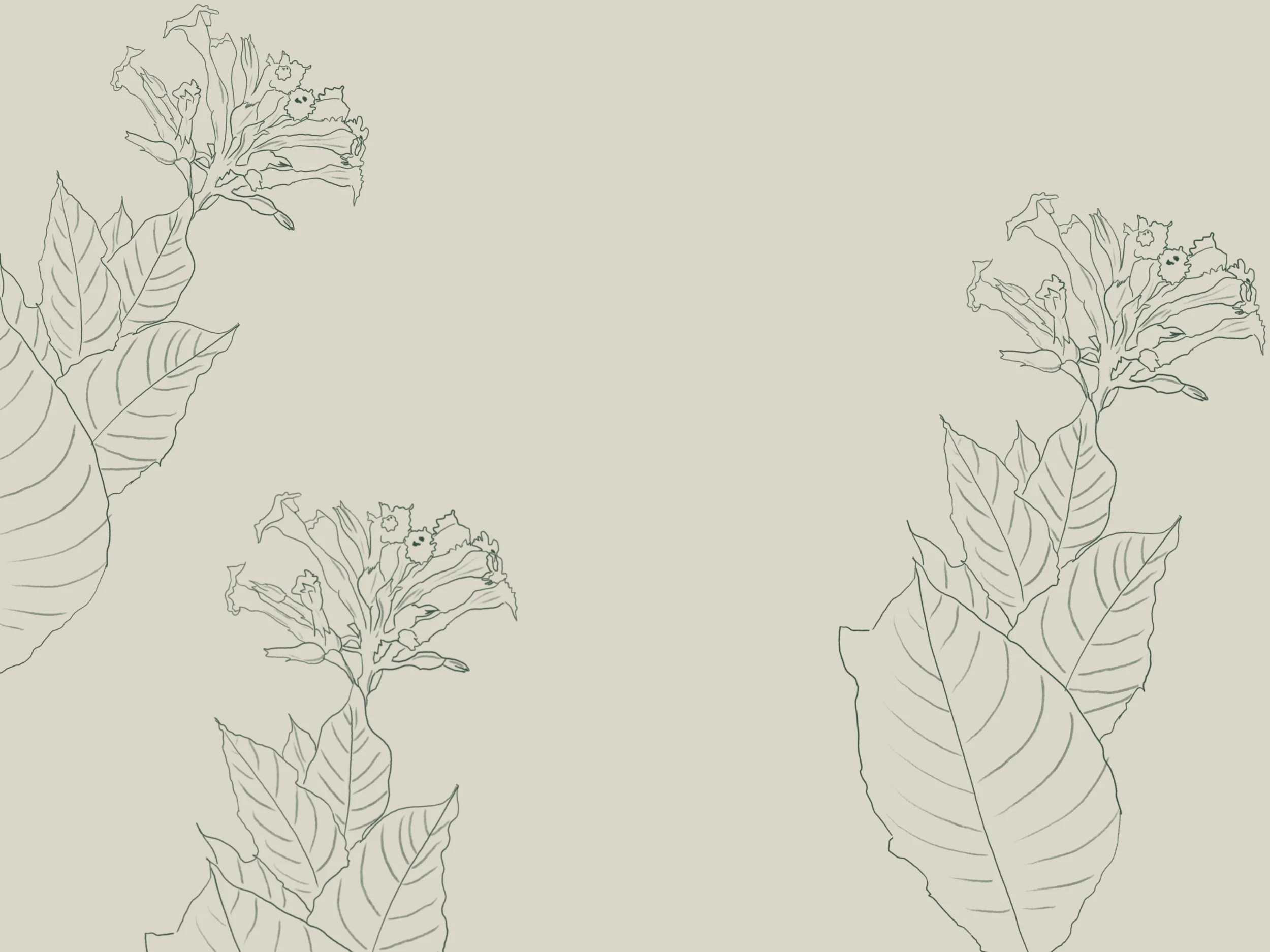
Tobacco (Nicotiana spp.), a member of the Solanaceae family, has a long history of ritual, medicinal, and social significance throughout the Indigenous cultures of the Americas. Among many South American groups—including the Muisca, Arawak, and Tukano—tobacco was regarded as a master plant, used to mediate between human and non-human realms. Chemically, tobacco species contain a suite of pyridine and pyrrolidine alkaloids, of which nicotine is the most abundant and pharmacologically significant. Nicotine’s interaction with nicotinic acetylcholine receptors produces stimulant, cognitive-enhancing, and anxiolytic effects, while chronic or high-dose use may lead to addiction and toxicity. Phytochemical research has also documented the presence of β-carbolines and other minor alkaloids that may contribute to the overall psychoactive profile of Nicotiana rustica and Nicotiana tabacum (Severson & Hren, 1997).
Pharmacological studies demonstrate that nicotine exerts biphasic effects on the nervous system—initial stimulation followed by depressant action—and possesses analgesic, anxiogenic/anxiolytic, and appetite-modulating properties (Benowitz, 2009). Traditional preparations vary widely: tobacco may be smoked, chewed, insufflated as powdered snuff (e.g., rapé), or consumed as a potent liquid infusion or enema, especially in Amazonian shamanic practices (Russell & Rahman, 2014). Nicotiana rustica, with nicotine concentrations several times higher than N. tabacum, is particularly prominent in ritual contexts.
Ethnobotanical scholarship documents tobacco’s central role in healing, divination, initiation rites, and communication with ancestor spirits or forest beings among numerous Indigenous groups (Wilbert, 1987). In the Andes, high-concentration tobacco extracts—sometimes blended with other psychoactive plants—were historically used to induce visionary states, purify the body, or prepare shamans for ritual work. Yet tobacco’s use carries significant health risks: excessive consumption or ingestion of strong decoctions can induce acute nicotine poisoning, marked by nausea, vomiting, bradycardia, seizures, and potentially respiratory failure (Tomassini et al., 2019). Archaeological and historical evidence also indicates that tobacco was one of the earliest domesticated medicinal plants in the Americas, spreading widely across the continent well before European contact (Winter, 2000).
For the Muysca of Suba, Zaitas (medicine and knowledge keepers) and elders turn to tobacco as a guide in spiritual, ritual, and political life. Before important meetings, they gather to smoke cigars, and the Zaita “opens the word,” asking permission from the land, ancestors, and spirits to speak on behalf of the community.
Tobacco is offered to the element of fire, gata, creating presence and transformation. It is a bridge to the ancestors, a way of making that “connection,” as Elder Ignacio says. As Zaitas express, “Tobacco cannot be absent; it is the first doorway to ancestral medicine—this is why it is called the master plant.” Only after tobacco is offered do other sacred plants enter the ceremony.
Nicotiana tabacum
Nicotiana rustica
“This is a spiritual connection that comes from the knowledge of the grandparents and ancestors. Whenever we engage in any activity, the tobacco cannot be missing, nor can the sacred fire or the spirit of Gata (fire, flame). From the tobacco leaf, the hosca is prepared, which is applied through the nose to heal sinusitis and migraines. It clears the mind (dust off—desempolva la mente), so that the person feels well and calm, especially those who are burdened with many problems and confusion. When they receive this medicine, they experience relief, peace, and a sense of improvement” (Interview with Zaita Ignacio Mususu, July 1, 2025).
References
Benowitz, N. L. (2009). Pharmacology of nicotine: Addiction, smoking-induced disease, and therapeutics. Annual Review of Pharmacology and Toxicology, 49, 57–71. https://doi.org/10.1146/annurev.pharmtox.48.113006.094742
Russell, C., & Rahman, S. (2014). Traditional uses of tobacco among Indigenous peoples of South America. Journal of Ethnopharmacology, 154(3), 701–710. https://doi.org/10.1016/j.jep.2014.04.008
Severson, R. F., & Hren, R. (1997). Nicotine and minor alkaloids in tobacco: Chemistry and pharmacology. Recent Advances in Phytochemistry, 31, 1–44. https://doi.org/10.1016/S0079-9920(08)60001-0
Tomassini, L., Garcia, R., & Martinez, P. (2019). Toxicity of Nicotiana spp.: Case studies and clinical implications. Toxicology Reports, 6, 1234–1245. https://doi.org/10.1016/j.toxrep.2019.07.004
Wilbert, J. (1987). Tobacco and Shamanism in South America. University of New Mexico Press.
Winter, J. (2000). Tobacco use in pre-Columbian America: Archaeological and historical perspectives. Smithsonian Institution Press.
Herbarium Specimen Reference
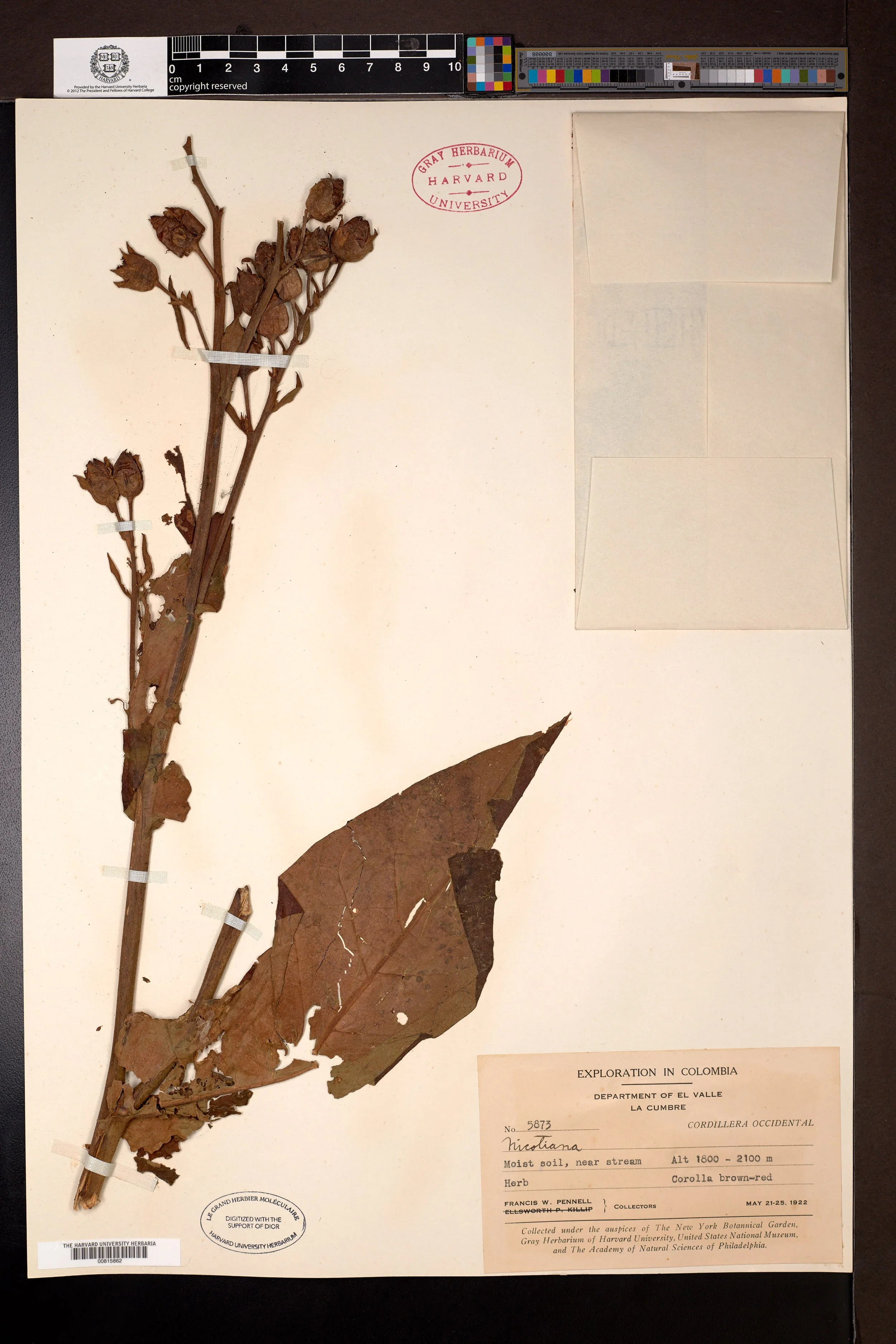
Pennell, F. W. (1922). Nicotiana sp. — specimen #00815862. Collected 21–25 May 1922 at El Valle; La Cumbre, Colombia, 1800–2100 m elevation (collector no. 5873). Harvard University Herbaria (GH). Barcode: 00815862. GUID: http://purl.oclc.org/net/edu.harvard.huh/guid/uuid/8962250e-f78f-4c02-a171-0e4022f85c16. Phenology: not determined. Preparation: pressed sheet.