
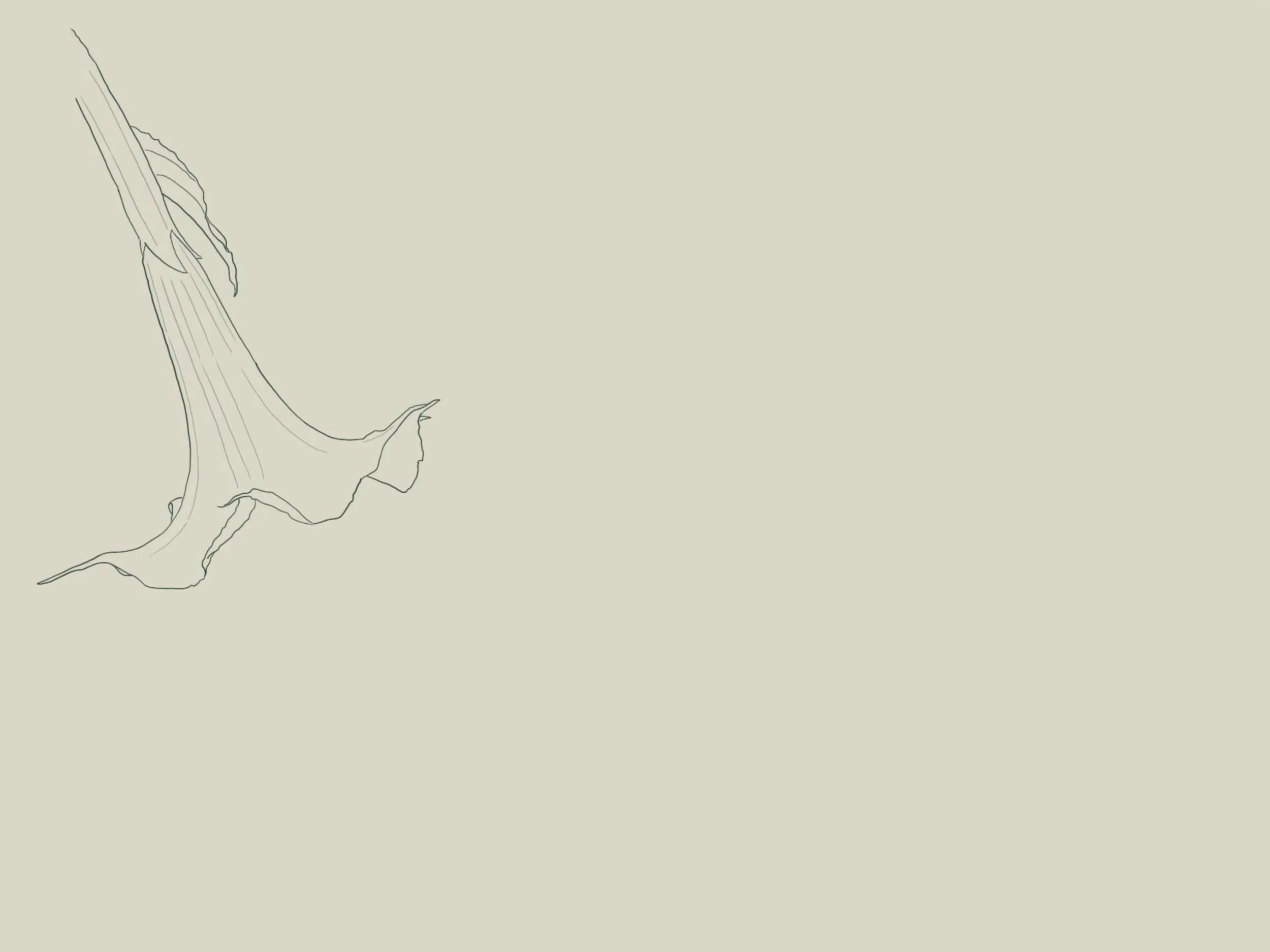
Tyhyquy
Brugmansia suaveolens
Borrachero
Brugmansia, commonly known in the Muysca community as tyhyquy, is a genus of flowering plants in the Solanaceae family with a long history of ritual and medicinal use in Andean traditional medicine. These plants contain potent tropane alkaloids—particularly scopolamine and atropine—which are responsible for both their psychotropic effects and high toxicity. Phytochemical studies have identified a broad range of compounds in Brugmansia suaveolens, including alkaloids, terpenes, flavonoids, and steroids. Pharmacological investigations indicate that aqueous extracts of Brugmansia flowers exhibit antinociceptive (pain-reducing) effects in animal models, while other preparations have been used for anti-inflammatory, muscle-relaxant, and sedative purposes (Petricevich et al., 2020).
Ethnobotanical research documents that Brugmansia has been employed by Andean traditional healers (curanderos) in both curative and divinatory rituals (DeFeo, 2004). In some traditional contexts, the plant is prepared as an infusion of leaves or stems, or its powdered seeds are incorporated into psychoactive brews such as San Pedro or ayahuasca (Torres, 2022). However, its use carries significant risks: misuse can lead to severe anticholinergic poisoning, with symptoms including delirium, hallucinations, and psychosis (Pundir et al., 2022). Historical accounts suggest that pre-Columbian Muisca communities used highly concentrated tobacco infusions combined with Brugmansia aurea L. and alcoholic chicha in ritual contexts, sometimes administering these mixtures to individuals who were to be sacrificed alongside their masters (Wilbert, 1987).
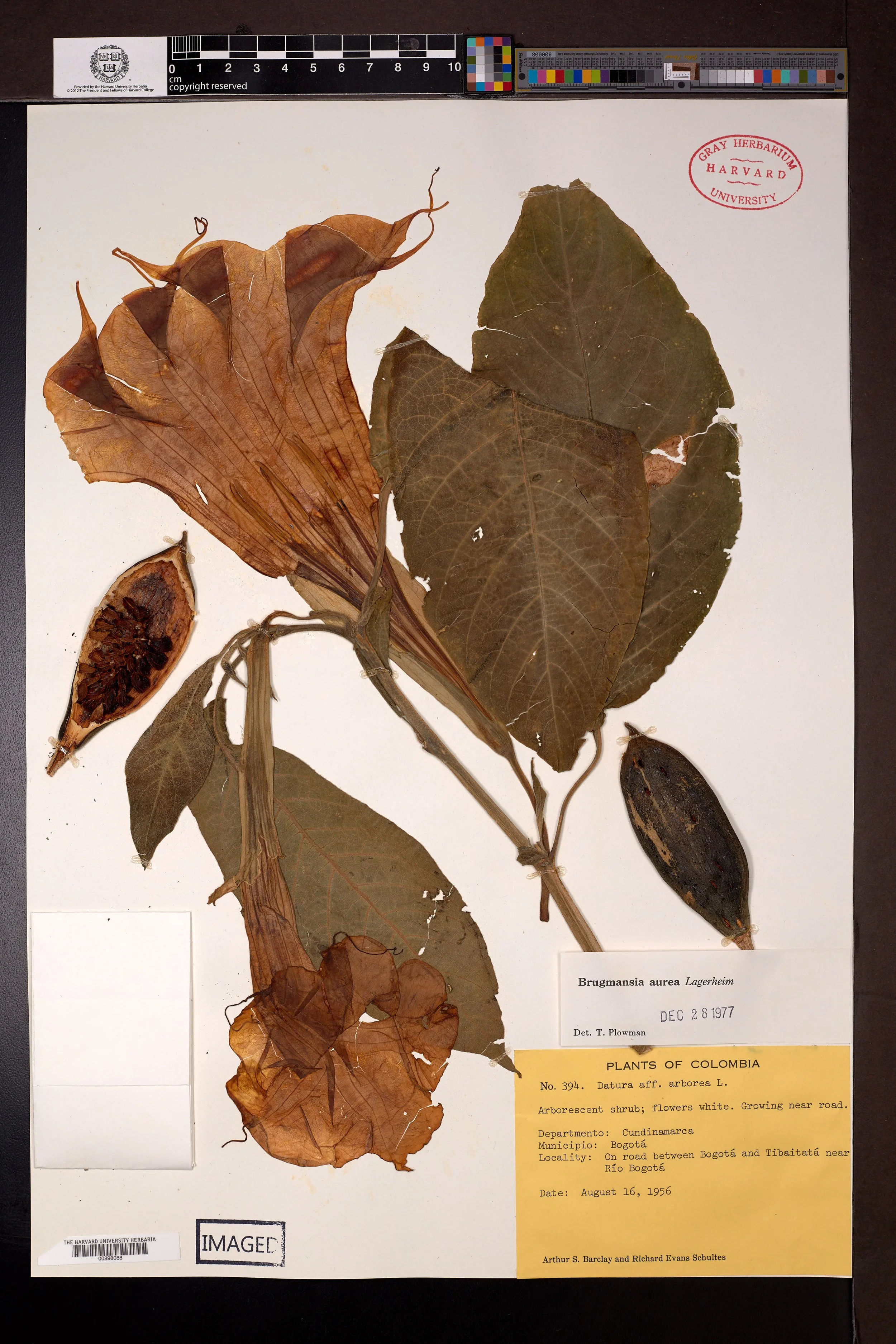
Barclay, A. S., & Schultes, R. E. (1956, August 16). Brugmansia aurea Lagerheim.
“The experience of borrachero is a plant of power. I’ll put it in this comparison: it is like yagé for Putumayo, or tyhyquy for the Muyscas. It was a plant of power, a medicinal plant, used for spiritual connection. Although it is no secret that tyhyquy seeds are sometimes used to make scopolamine, they are being misused, because this is a medicine that spiritually connects you. Personally, all the grandmothers in the past had it in their homes. The smell of its flowers is so delicious that it induces genuine sleep and deep relaxation. I use the flowers and leaves of tyhyquy to make protective medicines and perform cleansing rituals. These practices help one guard against negative energies and disharmony. While I haven’t done very deep experimentation with tyhyquy itself, I have worked extensively with tobacco, making poultices and other preparations for the care of women’s health. The preparation of hosca, a form of tobacco medicine, is administered by blowing it through the nose. My work always involves intention: as my grandparents taught me, the greater purpose is to put that thought and intention from the heart toward the healing of others. This is the essence of the practice, and it is beautiful. As Muyscas, we work closely with the elementals. Water serves as a medium of healing, and the earth is represented through food, medicines, and plants. Wind carries words, advice, and music that aid in healing, while fire serves as a transmuting element, transforming energies, feelings, and thoughts. Fire mirrors our inner fire, our pyquyqy, our heart, and our spiritual strength” (Interview excerpt with Zaita Myriam Triviño, January 13, 2025).
References
De Feo, V. (2004). Ethnomedicinal uses of Brugmansia species: A review. Fitoterapia, 75(7–8), 707–716.
Petricevich, V. L., Reyna, S., & Rojas-Martínez, R. (2020). Analgesic and anti-inflammatory effects of Brugmansia suaveolens flower extracts in animal models. Journal of Ethnopharmacology, 252, 112568.
Pundir, C. S., Yadav, P., & Yadav, S. (2022). Tropane alkaloid toxicity and anticholinergic poisoning: A clinical overview. Clinical Toxicology, 60(4), 383–395.
Torres, C. M. (2022). Shamanic plant mixtures in the Andes: Ethnopharmacology of San Pedro and associated plants. In Traditional Psychoactive Plant Use in South America (pp. 85–104). Springer.
Wilbert, J. (1987). Tobacco and Shamanism in South America. Yale University Press.
Herbarium Specimen Reference
Barclay, A. S., & Schultes, R. E. (1956). Brugmansia aurea Lagerheim — Herbarium specimen collected on 16 August 1956, on the road between Bogotá and Tibaitatá near Río Bogotá, Cundinamarca, Colombia. Harvard University Herbaria (GH), Barcode 00898088. GUID: http://purl.oclc.org/net/edu.harvard.huh/guid/uuid/4accd133-de4a-4f1a-8ee4-75dbe76bb564. Phenology: Flower and fruit. Preparation: Pressed sheet.